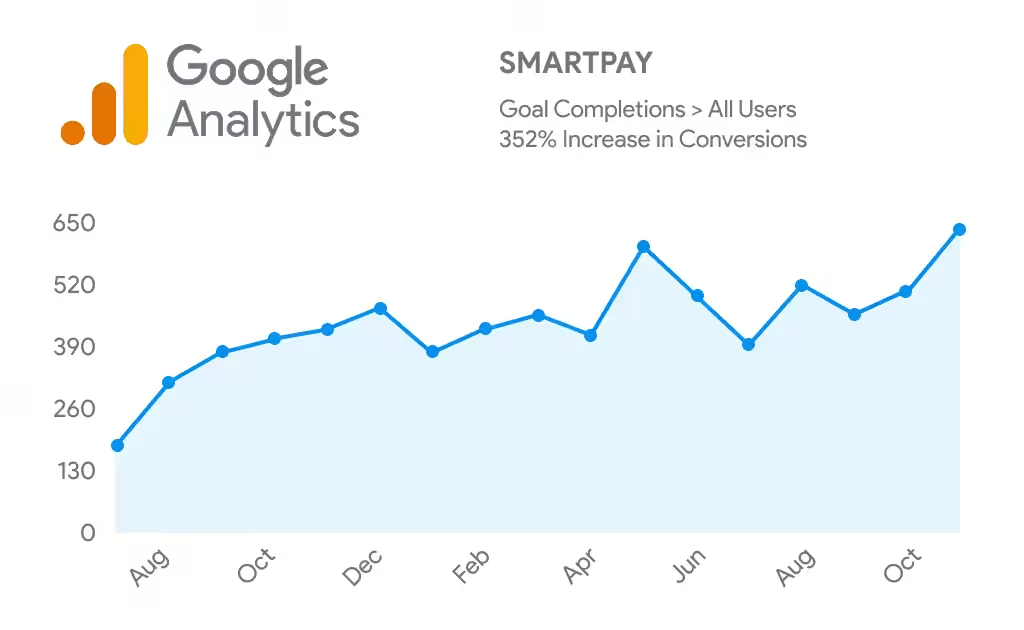




How Merlo Coffee Uncovered Hidden Growth with Product Segmentation in Google Ads
From a blended ROAS to true SKU-level profitability—see how one of Australia’s favourite coffee roasters found 6-figure scale opportunities inside their existing campaigns.
Meet Merlo Coffee
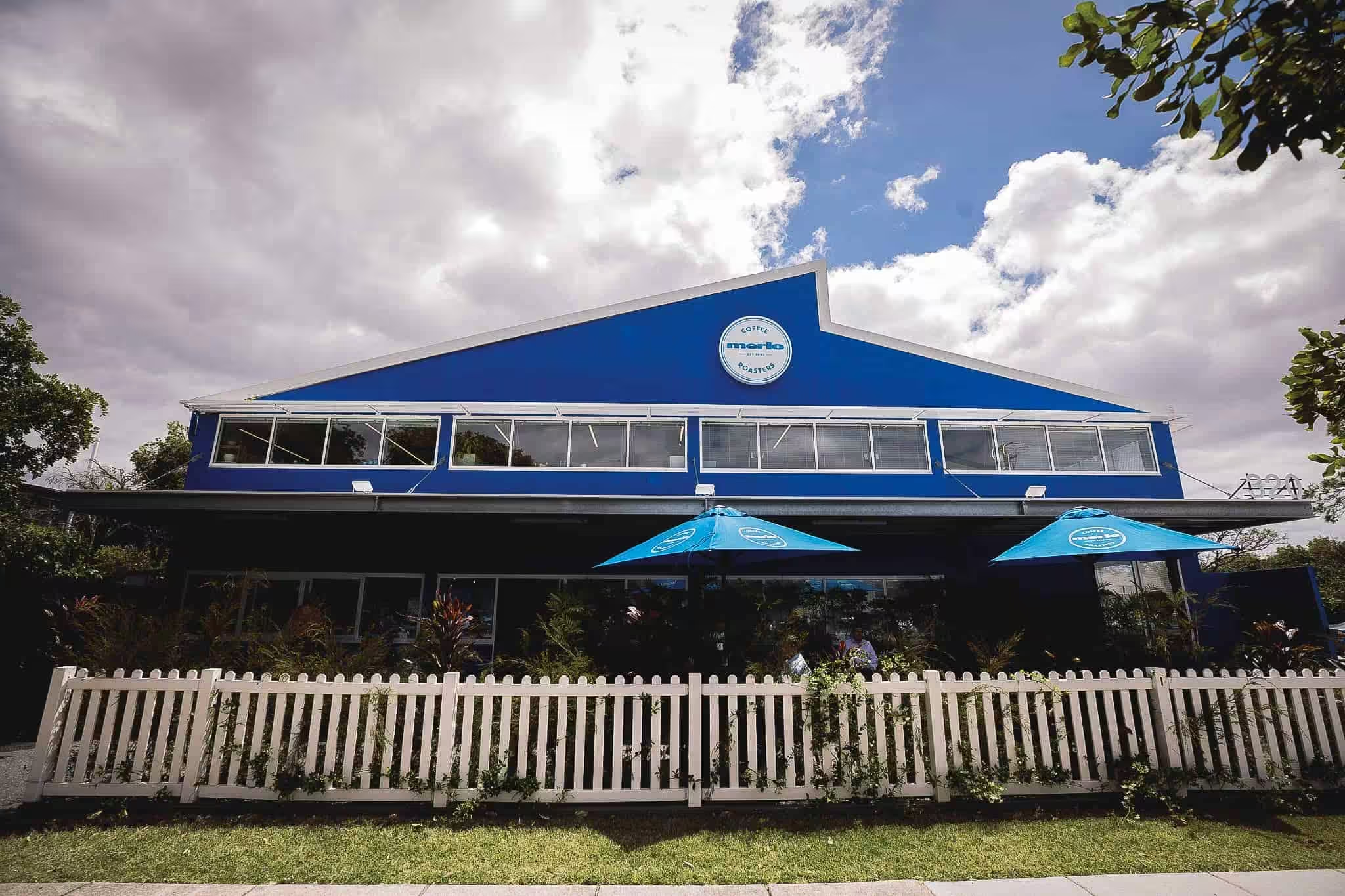
Merlo Coffee is a well-established Australian coffee brand known for roasting fresh coffee daily and delivering it to cafes, retailers, and households nationwide.
With a focus on freshness, sustainability, and ethical sourcing, Merlo has built a strong online presence to complement its bricks-and-mortar Espresso Bars.
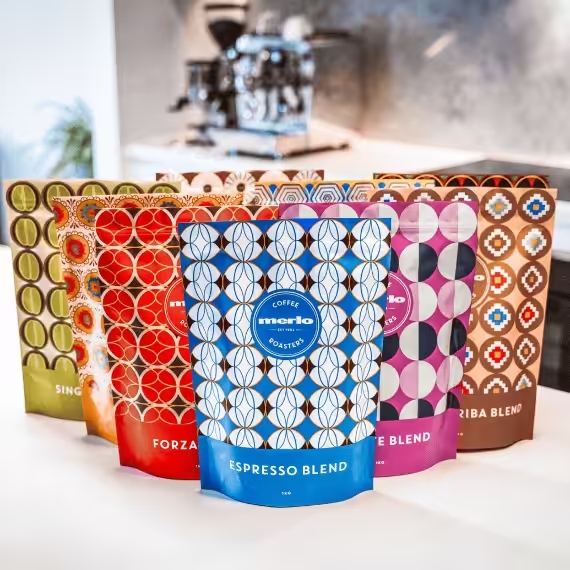
With over 30 coffee blends, brewing gear, accessories, and bundles in their Ecommerce store, the brand was running Google Shopping campaigns and Performance Max to drive sales. While the campaigns were delivering strong revenue, deeper insights into product-level performance were missing.
The Challenge in the Coffee Industry
Online coffee sales are booming, but the competition is intense:

Customers expect fast delivery, premium packaging, and loyalty perks

A wide range of SKUs—from beans to machines to bundles—make ad targeting complex

Buying habits vary: some search by flavour, others by grind, others by product type

Catch-all campaigns often favour generic best-sellers while ignoring niche or emerging blends
"Due North is a great agency to work with. Their communication is excellent, they've bought the digital strategy that is taking our marketing to the next level, and they are delivering on what they say they will. Very happy with our decision to bring them onboard."
- Pippa McCreery | Head of eCommerce, Merlo Coffee
What We Discovered in the Audit
Merlo’s Google Ads account had been running simplified category-based campaigns. While top-selling products were consistently scaling, there was:
- No SKU-level visibility into poor performers
- Over 50% of ad spend on products delivering zero conversions or poor performance
- High-potential products receiving almost no impressions or clicks
- A strong blended ROAS masking what was actually driving profit
Turning ROAS into Real Results with Product Segmentation
We implemented a product-level segmentation script to classify all products into five categories based on individual ROAS and profit contribution:
Over-Index
Strong ROAS, high profit (keep scaling)
Index
Decent ROAS, monitor closely
Near-Index
Break-even, potential for testing
No-Index
Not shown (visibility issue)
Under-Index
High spend, low/zero return
Next steps:
- Reallocated increased budget to Over-Index & Near-Index SKUs
- Create a low cost bid strategy campaign (Maximise Clicks) to increase No-Index products
- Limit budget for Under-Index products similar to No-Index products (or combined with depending on budget)
- Enabled dynamic tracking at the product level to assign products into correct campaigns
KPI Comparison Table
| Metric | Before | After | Change |
|---|---|---|---|
| Impressions | 379,053 | 238,787 | 140,266 |
| Clicks | 3,320 | 2,349 | 971 |
| Cost | $2,468.32 | $1,796.82 | $671.50 |
| Conv. Value | $22,533.78 | $26,613.75 | $4,080.97 |
| ROAS | 9.13x | 14.81x | +5.68 |
| Purchases | 316.83 | 382.00 | +65.17 |
| Under-Index Spend | $1,335.81 | $102.63 | Eliminated |
We recovered around 50% in wasted spend a month, and reinvested it in products that now drive sustainable, scalable profit.
Key Takeaways for Ecommerce Advertisers
Don’t rely on blended ROAS - segment your product performance
Wasted spend hides in under-indexing products
High-potential products receiving almost no impressions or clicks
A strong blended ROAS masking what was actually driving profit