Ask ten business owners what an AI receptionist is and you will probably get ten different answers.
That’s normal. It’s still a new category. Most people have seen one version of it, heard about another version, and been pitched a third version by someone selling software. So there’s a lot of confusion around what it is, what it can do, what it should cost and whether it’s actually worth implementing.
Like most things in life, the answer sits on a spectrum.
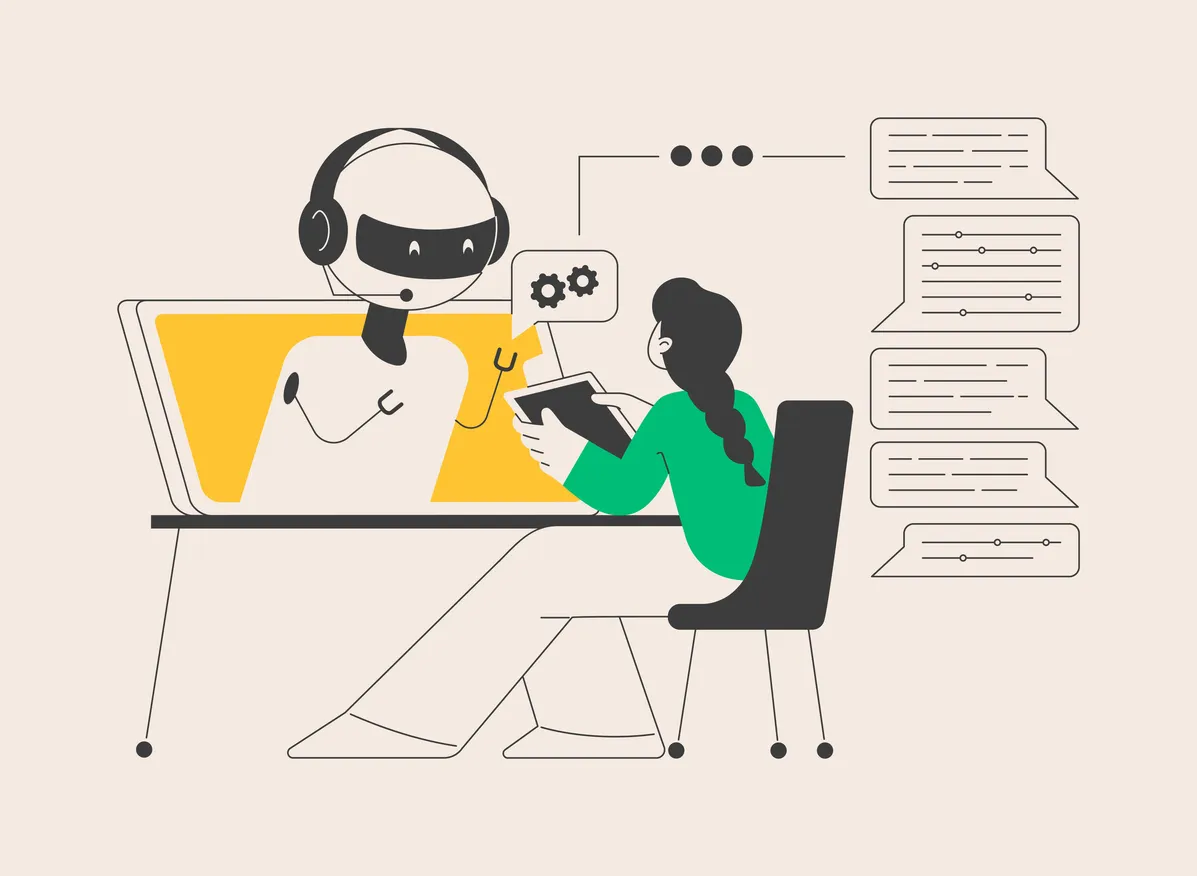
At the simple end, an AI receptionist answers the phone, takes a message and routes calls.
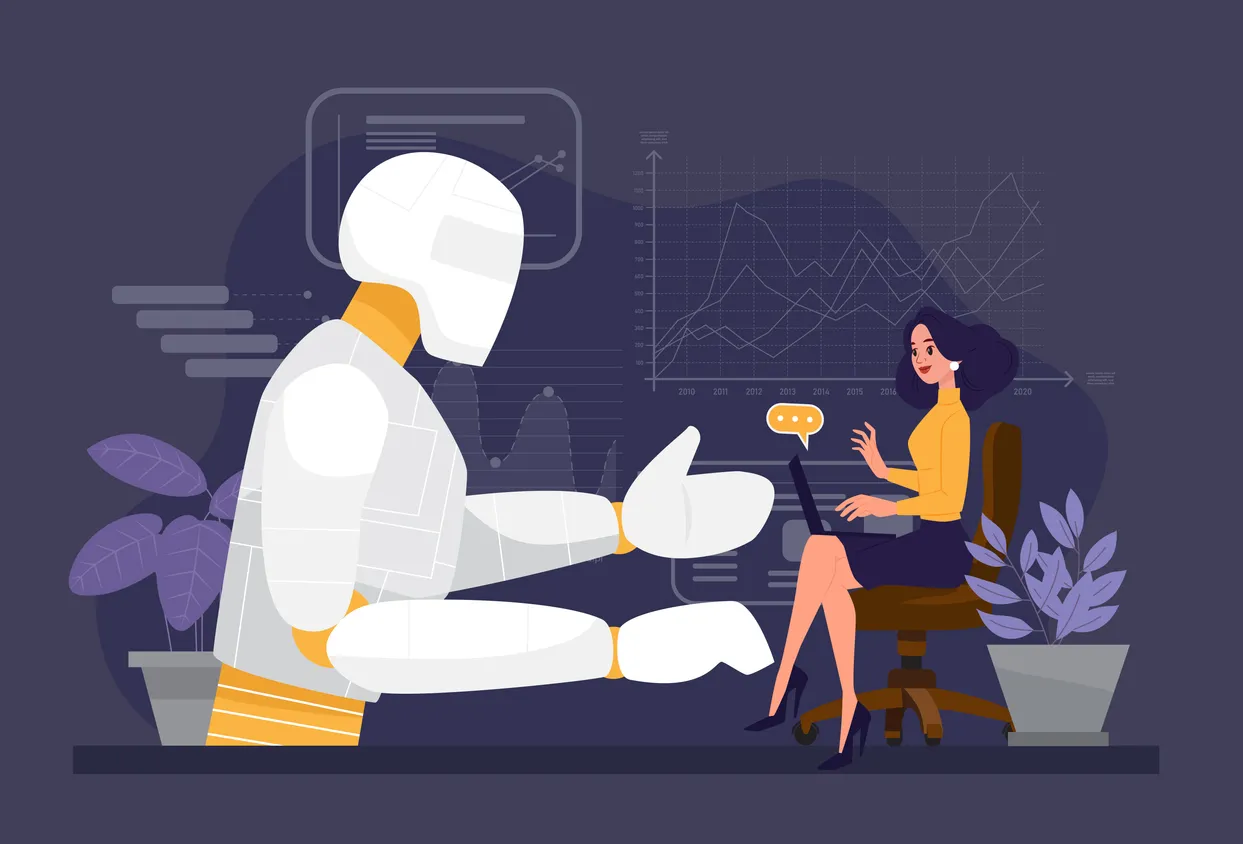
At the modern end, a properly built AI receptionist is much closer to an AI sales agent. It’s trained on your business, your process, your systems, your tone of voice and your rules. It can answer complex questions, qualify leads, provide pricing logic, send information, book meetings, follow up and trigger the next step automatically.
Those two things are not the same.
One is a front-desk answering tool. The other is sales and customer service infrastructure.
That’s why the question should not only be, “What is an AI receptionist?”
The better question is, “What can it do for the business?”
The simple version: it’s a receptionist
The simplest definition is this:
“An AI receptionist is a digital assistant that answers calls and handles basic enquiries without a human needing to pick up the phone.”
In its most basic form, it can:
- Answer the phone
- Ask who is calling
- Take a message
- Route the call
- Provide basic information
- Pass the enquiry to a human
For some businesses, that’s the starting point.
If your team is missing calls, getting interrupted all day or spending too much time answering the same basic questions, even a simple AI receptionist can be useful. It means fewer missed calls. It means the phone is answered after hours. It means the team is not constantly pulled away from higher-value work.
But this version is also limited.
It’s basically call handling. It’s the technology of two years ago. Useful? yes. Transformational? no.
The issue is that many businesses still think this is where AI receptionists stop. They do not.
The technology has moved quickly. What used to be a basic phone-answering assistant can now be built into something far more capable, provided the strategy, process and knowledge base are built properly.
The modern version: it’s an AI sales agent
Today’s best AI receptionists are not really receptionists. They are AI sales agents.
That sounds like a small language change, but it’s a big shift in functionality.
A receptionist answers the door. A sales agent works the opportunity.
A modern AI sales agent can be trained on your business. It can understand what you sell, who you serve, what your customers ask, what objections come up, how your pricing works, what your sales process looks like and when a human needs to step in.
It can also be trained on your tone of voice.
That matters more than people think. A good AI system should not sound like generic software. It should sound like your business. If your brand is direct, it should be direct. If your brand is warm and supportive, it should be warm and supportive. If your sales process is consultative, the AI should not behave like a pushy telemarketer.
This is where the real value starts.
When an AI receptionist is trained properly, it doesn’t just answer questions. It can help move the customer forward.
What can a modern AI receptionist do?
A properly built AI receptionist or AI sales agent can do far more than take messages.
It can provide complex product or service information. Not just opening hours and “someone will call you back”, but real answers based on your approved knowledge base.
It can qualify leads. It can ask the questions your best salesperson would ask. What are they looking for? Where are they located? What problem are they trying to solve? What timeframe are they working to? What budget range makes sense? Are they ready to speak with someone now, or do they need more information first?
It can follow your sales process and scripts. That is one of the biggest advantages. Humans are inconsistent. Even good people skip steps when they are busy. AI follows the process every time.
It can provide pricing and quotes where the rules are clear. That doesn’t mean it should make up prices or promise things it can’t deliver. It means it can use approved pricing logic, quote templates and escalation rules to help the customer faster.
It can automate next steps. That might mean sending an email with more information. It might mean creating a CRM record. It might mean triggering a quote. It might mean booking an appointment in the right person’s calendar. It might mean starting a follow-up sequence.
It can provide resources. Brochures, guides, product sheets, booking links, FAQs, comparison pages, next-step instructions and anything else that helps the customer make progress.
It can also support customer service. Simple service requests, product returns, warranty questions, delivery updates, booking changes and support triage can all be handled or routed properly if the system is built with the right workflows.
This is why the category is changing so fast.
The basic version answers the phone. The modern version helps run the process.
Why this matters commercially
Most businesses don’t have a lead problem first. They have a handling problem.
The enquiry comes in, but nobody answers quickly enough. The customer calls after hours. The form sits in an inbox. The salesperson is busy. The follow-up doesn’t happen. The quote goes out late. The customer asks for information and gets a vague reply. The CRM is not updated. The next step is not triggered.
Every one of those moments costs money.
An AI sales agent helps because it’s always there, always consistent and always following the process it has been given.
It doesn’t forget. It doesn’t get busy. It doesn’t decide to skip qualification because it feels awkward. It doesn’t leave the customer waiting until Monday morning.
That’s why these systems can become self-funding.
If the AI helps recover leads that used to be missed, that’s revenue. If it speeds up response times, that’s revenue. If it qualifies better, that saves wasted sales time. If it books more appointments, sends better information and follows up more consistently, the pipeline improves.
For many businesses, the return is not theoretical. The opportunity is already sitting there in missed calls, slow replies, poor follow-up and repetitive admin.
It can do part of your sales and service team’s work
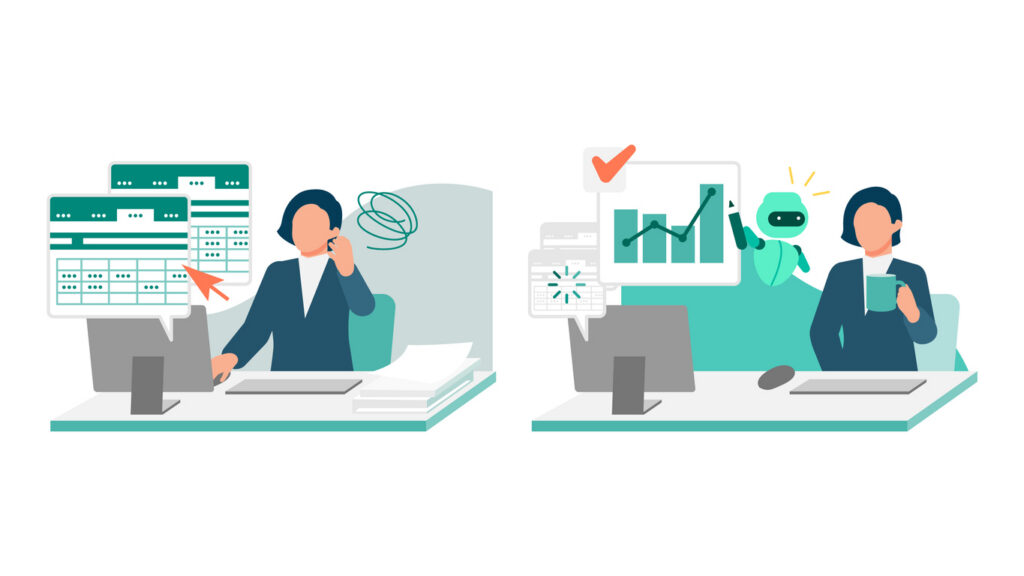
A well-built AI sales agent can do a large portion of the repetitive work currently handled by sales and customer service teams.
It can answer repeat questions. It can collect customer details. It can qualify enquiries. It can send information. It can update systems. It can follow up. It can route service issues. It can book meetings. It can create a clean handover for a human.
That doesn’t mean it replaces your team. It complements them.
Your people should be spending more time on the conversations that actually need judgement, experience, relationship-building and negotiation. They shouldn’t be buried in the same five questions, messy admin, basic qualification and chasing people who aren’t ready.
The best model is AI plus human.
AI handles the volume, speed, consistency and admin. Humans handle the nuance, trust, strategy and closing.
That’s where the leverage sits.
What it needs to work properly
An AI receptionist doesn’t become useful just because someone switches it on. It needs to be built properly.
The first requirement is a strong knowledge base. The AI needs to know your products, services, pricing rules, FAQs, objections, scripts, tone of voice, policies, service areas and escalation rules. If the knowledge base is weak, the AI will be weak.
The second requirement is process. What should happen when a lead is hot? What should happen when the customer wants a quote? What should happen when the person is a poor fit? What should happen when the AI is not confident? What should happen after the first conversation?
The third requirement is integration. If the AI has to book appointments, it needs calendar access. If it has to update leads, it needs CRM integration. If it has to send quotes, it needs quote rules and templates. If it has to support service requests, it needs the right workflow.
The fourth requirement is testing and training. You need to test real scenarios before launch, then keep improving it once customers start using it.
That’s the difference between a novelty and a genuine business asset.
The technology is improving quickly
This space is moving fast.
Think about a great red wine, but faster.
With the right foundation, your AI sales agent improves as the technology improves. The voice gets better. The understanding gets better. The integrations get better. The workflows get smarter. The handover to humans becomes cleaner.
And because your knowledge base and sales process already exist, improvements in the underlying AI can make your agent better without you rebuilding the whole thing from scratch.
That’s why waiting too long has a cost.
The businesses that start now aren’t just buying today’s version. They are building the foundation that future versions will improve on.
The takeaway
So, what is an AI receptionist?
At the basic level, it’s a tool that answers the phone, takes messages and routes calls. But that definition is already out of date.
A modern AI receptionist, built properly, is an AI sales agent. It knows your business, follows your process, speaks in your tone of voice, answers complex questions, qualifies leads, sends information, books appointments, supports customer service and automates the next step.
That’s why it’s such a strong investment.
Not because it’s “AI”. Because it helps your business respond faster, follow up better, serve customers more consistently and turn more enquiries into revenue.
Book an AI Sales Agent Strategy Session with Due North and map what a modern AI receptionist could actually do inside your business.