Most business owners still think the customer journey starts when someone fills out a form, calls the office, or asks to speak to sales.
It doesn’t.
By that point, the customer has usually done half the work already. They’ve searched you. Searched your competitors. Read reviews. Looked for pricing. Compared options. Asked AI. Checked your website. Decided whether you look credible. And in many cases, made up their mind before you even knew they existed.
The numbers are clear. A Gartner survey reported that 67% of buyers prefer a person-free experience, with buyers wanting to engage on their own terms rather than being pushed into a sales conversation too early (Demand Gen Report). Another buyer study found that buyers are nearly 70% through the purchasing process before engaging sellers, with buyers initiating first contact 80% of the time (Demand Gen Report).
That is the shift.
Customers are not saying, “I never want to speak to a human.”
They are saying, “I don’t want to speak to a human before I’m ready.”
There is a massive difference.
The first 50-70% of the sale has changed
For years, businesses treated sales conversations as the education stage.
The customer would call. The salesperson would explain the product. The customer would ask questions. The salesperson would qualify them. The process would move from there.
That model is breaking.
Today, customers expect to educate themselves first. They want the information upfront. They want it clearly. They want it quickly. They want it without having to book a call, wait for a callback, leave a voicemail, or sit through a sales pitch they didn’t ask for.
The anonymous research phase is now where a huge amount of the decision is made. In the 6sense buyer research covered by Demand Gen Report, 81% of buyers already had a preferred vendor at the time of first contact, and 85% had already established purchase requirements before reaching out (Demand Gen Report).
That should make every business owner uncomfortable.
Because it means the sale is being won or lost before your team gets a chance to “sell.”
If your website is vague, you lose. If your enquiry response is slow, you lose. If your FAQs are thin, you lose. If your team gives inconsistent answers, you lose. If your competitor gives the customer what they need in 60 seconds and you make them wait until Monday, you lose.
Customers want faster, simpler and easier
This is not complicated.
People want answers now. They don’t want to wait on hold for nine minutes. They don’t want to leave a message and hope someone calls back. They don’t want to ring at 5:45pm and find out the team knocked off at 5:40pm. They don’t want to repeat the same information to three different people. They don’t want to be forced into a conversation just to find out whether you can help them.
They want the same thing you want when you’re buying something. They want to know:
- Is this right for me?
- What does it cost?
- How does it work?
- What happens next?
- Can I trust you?
- How quickly can this be done?
- What are the catches?
Forrester has been warning sales teams about this shift. Its analysis says self-service buying is now present across all buying stages, product types, price points, and channels, while buyers still value human interaction when it is actually useful (Forrester).
That last part matters.
This is not anti-human. It is anti-friction.
Customers don’t hate salespeople. They hate being slowed down.
The problem is not the customer. It is the business.
Most businesses are still built around the company’s convenience, not the customer’s.
- Office hours
- Manual callbacks
- One person who knows the answer
- A shared inbox nobody owns
- Sales reps who all explain things differently
- A website that says just enough to sound professional but not enough to help someone make a decision
Then the business wonders why conversion is inconsistent.
The answer is obvious. The customer is ready for a faster buying process, but the business is still forcing them through a slower one.
Forrester’s data shows the gap inside sales organisations clearly: 63% of sales leaders said digital buying behaviours would significantly impact their organisation in the next two years, yet only 37% said digitising the buyer journey was a top priority (Forrester).
That is the gap Due North is talking about.
Customers have moved. Most businesses haven’t.
An AI sales agent gives customers what they actually want
An AI sales agent is not a gimmick. It is not a website chatbot sitting in the corner waiting for someone to click it.
A properly built AI sales agent gives customers what they are already asking for.
- Fast answers
- Clear information
- Consistent responses
- No hold music
- No pressure
- No “someone will get back to you”
- No waiting until business hours
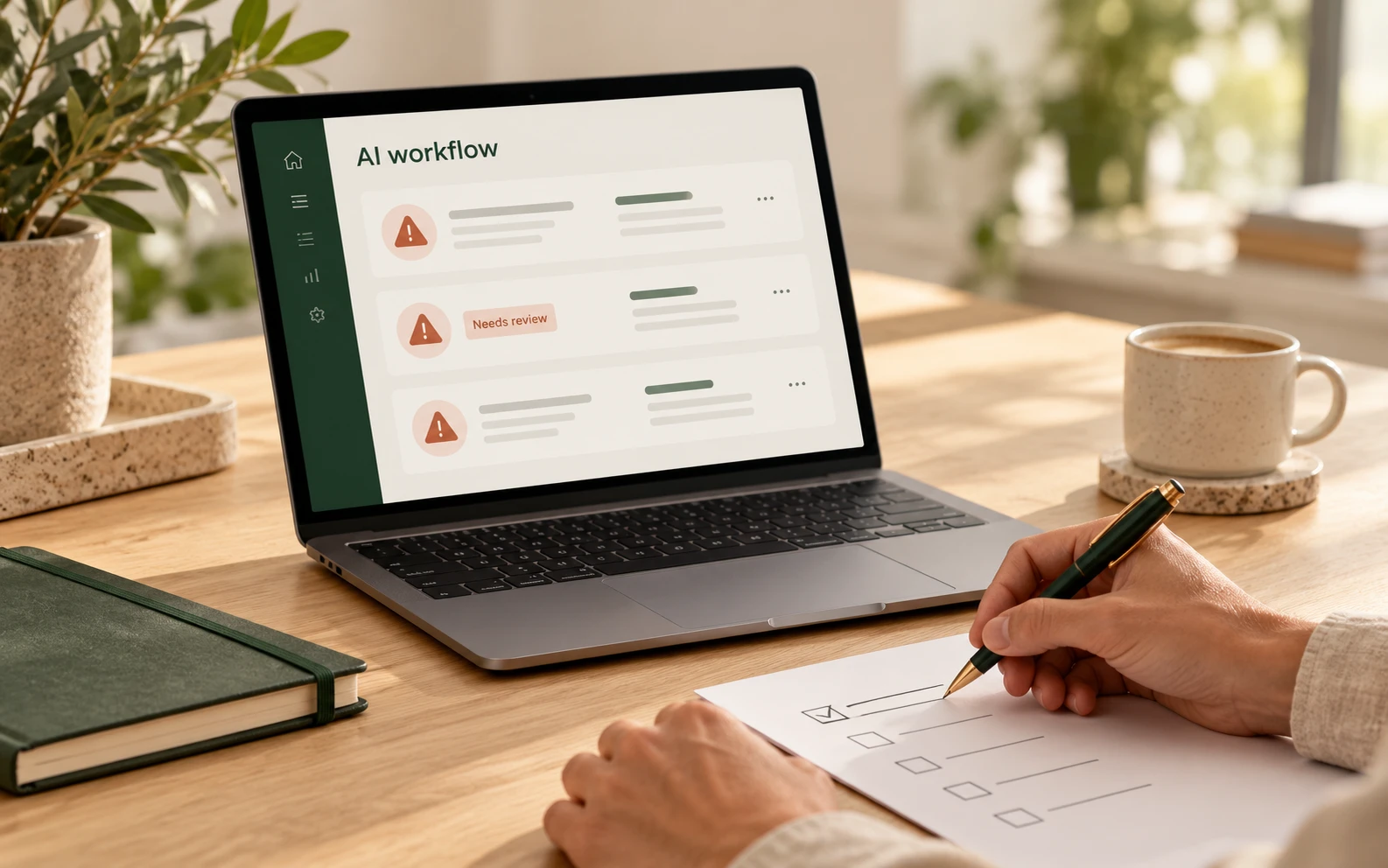
It can answer common questions, qualify the enquiry, send the right information, book the next step, update the CRM, trigger follow-up, and hand over to a human when the conversation actually needs one.
This is where the economics become obvious.
IBM-attributed research cited in chatbot industry analysis says AI chatbots can handle up to 80% of routine tasks and customer inquiries, freeing human agents for more complex issues (ChatBot.com). Another article citing IBM says chatbots can answer approximately 79% of normal questions (Advertising Week).
Even if your business only automated half that volume, the impact would be significant.
- Fewer repetitive calls.
- Fewer missed enquiries.
- Fewer inconsistent answers.
- Faster response times.
- More qualified conversations for your human team.
That is not technology for technology’s sake. That is commercial reality.
Accuracy is not optional
There is one thing people get wrong about AI sales agents.
They think AI is the magic. It isn’t. The knowledge base is the magic.
If the AI has poor information, it will give poor answers. If the AI has vague instructions, it will behave vaguely. If the AI has no rules for escalation, it will try to handle conversations it should hand over.
But if the knowledge base is built properly, the AI becomes more consistent than a human team.
- It doesn’t forget the pricing rule.
- It doesn’t guess the delivery timeframe.
- It doesn’t tell one customer one thing and another customer something different.
- It doesn’t make up a process because it is busy, tired, rushed, or trying to get off the phone.
This matters because customers are sick of bad information.
Everyone has had the experience. You call a business and get told one thing. Then you act on that information and find out later it was wrong. The person meant well. They were just misinformed, undertrained, or guessing.
That mistake costs trust.
An AI sales agent, built from a proper business knowledge base, removes a huge amount of that variance. It gives the approved answer every time. And when it doesn’t know, it should say so and escalate.
That is how you build trust at scale.
Transactional enquiries belong with AI first
Not every enquiry deserves a senior person’s time.
That might sound harsh, but it’s true.
If someone wants opening hours, pricing guidance, service areas, availability, delivery timing, product fit, basic qualification, or the next step, they don’t need a 30-minute call with your best salesperson.
They need a clear answer.
For transactional enquiries, AI is often the better first experience. It is faster. It is less awkward. It removes the pressure. It gives the customer space to evaluate without feeling like someone is trying to close them.
That last point is underrated.
A lot of customers do not want to be sold to. They want to decide.
They want to ask the questions that matter to them, compare the answers, and move when they are ready. An AI sales agent is unemotional. It doesn’t get defensive. It doesn’t push for the close because it needs commission. It doesn’t change tone because the customer sounds unsure.
- It gives the information
- It qualifies
- It helps
- It moves the customer to the next step when the customer is ready
That is exactly what many buyers now prefer in the early stage.
Relationship sales still need humans
None of this means humans disappear. In fact, the opposite is true.
The better the AI handles the first stage, the more valuable your human team becomes in the moments that actually require a human.
- Complex deals still need trust
- High-value purchases still need judgment
- Sensitive conversations still need empathy
- Technical edge cases still need experience
- Long-term relationships still need people
The mistake is using humans for the work AI can already do better:
- Answering the same question 40 times a week
- Chasing basic qualification
- Sending the same brochure
- Following up because someone forgot
- Copying notes into the CRM
- Responding to after-hours enquiries two days late
That is not relationship building. That is administrative drag.
Your best people should be building trust, handling complexity, negotiating properly, protecting margin, and closing the deals where a human relationship changes the outcome.
The AI should handle the first 50-70% of the process. The human should handle the part where being human actually matters.
The generational shift is real, but speed matters more than age
Yes, younger customers are more comfortable with messaging, chat, AI assistants, and self-service. That is part of the shift.
But this is bigger than a generational trend.
Everyone is becoming less tolerant of slow service.
A Nextiva study on Gen Z support behaviour found that 84% check Google and 49% check an AI assistant before contacting support, while the same research also found many still use phone support when it suits the situation (Nextiva).
That is the real lesson.
It is not “young people hate phone calls.”
It is “customers choose the channel that gets them the answer fastest”:
- Sometimes that is chat
- Sometimes it is a phone call
- Sometimes it is an email
- Sometimes it is a form
- Sometimes it is an AI assistant
The business that wins is not the one that guesses the customer’s preferred channel. It is the one that gives clear, consistent answers across all of them.
The bottom-line impact is obvious
This is where the conversation should land for business owners.
An AI sales agent is not just a customer experience upgrade. It changes the economics of your sales process.
- It reduces the cost of handling routine enquiries.
- It increases the percentage of leads that receive an immediate response.
- It improves consistency.
- It captures cleaner data.
- It gives customers answers when your team is unavailable.
- It frees human staff to focus on higher-value work.
And it gives you something most businesses still do not have: a sales process that runs the same way every time.
That is the commercial case.
Not hype. Not “AI will replace everyone.” Not another tool for the sake of it.
A better operating model.
The AI handles the first stage of the sale: information, qualification, response, follow-up, nurture, booking, and handover.
The human handles the relationship: trust, complexity, judgment, commercial nuance, and closing the larger deals.
That combination is where the leverage is.
AI alone is not the answer.
Humans alone are now too slow, too expensive, and too inconsistent for the volume of routine enquiries most businesses deal with.
But humans plus AI sales agents?
That is where the next advantage sits.
Ready to see what this looks like in your business?
If your customers are already doing the first half of the buying process without you, your job is not to force them back into an old sales model.
Your job is to support the way they already buy:
- Give them answers
- Make it easy
- Respond instantly
- Be accurate
- Remove the pressure
- Escalate to a human when it matters
That is what a properly built AI sales agent does.
At Due North, we build AI sales agents for businesses that want faster response, better qualification, consistent follow-up, and more sales capacity without adding more headcount into a broken process.
If you want to understand what an AI sales agent would look like for your business, book an AI Sales Agent Strategy Session with Due North.
No hard sell.
Just a clear look at where your current process is leaking, what can be automated, and where your humans should be spending their time.